Part 2 - Prayerful reflection upon the Sacrament of Baptism
Introduction (to the reader)
This text is meant to be approached as a “meditation”, not a talk. The pauses are deliberate and are important. They give time for you to listen to the movement of the Holy Spirit speaking to you in the depth of your heart.Your Sacramental Life
As children many of us were required to learn by heart, from the
Catechism, that a “Sacrament is an outward sign of inward grace.” This
definition didn’t mean a whole lot to us then and standing on its own, it really
wouldn’t now.
It means far more to me to speak of a Sacrament as being one of the ways in
which God enters into our lives and makes his love present to us. Veiled in
symbolic actions our sacramental life speaks of God’s love for us. Through the
Sacraments God:
makes present the love that has existed for all eternity,
gives to us a meaningful experience of that love and
invites us to deepen our love for him.
Do we understand how? No.
But then there are many realities in our lives that we cannot understand, but
that doesn’t make them any less real. What is real reaches me in other ways, by
other routes. God is one such reality.
Because we are so familiar with the Sacraments, it is possible that we fail to
be consciously and fully aware of the tremendous gift they are to us; it is
possible that we lose sight of the presence of God who is in our midst
immediately and personally.
In this meditation we are going to open our hearts to the power of the Holy
Spirit and journey towards a greater appreciation of the gift of our sacramental
life and a deepening of our awareness of the mystery of God’s love and his
presence in our lives.
Pause
Our journey in faith is not to be along the path of learning, for learning alone
will not reveal to us the mystery. Our journey in faith will draw us away from
the priorities that surround us, the society which values information far more
than insight. We must journey in prayer to another level of consciousness where
God can deepen our awareness of what we have always believed: that awareness
that brought Peter, James and John to their knees on the mount of the
transfiguration, that awareness spoken of by the two apostles at Emmaus as they
recognised Jesus in the breaking of the bread.
It is for this gift of awareness that we pray, that gift which
enables us to see what is hidden,
hear what is unspoken and
touch what is veiled.
that gift which is communion with the very heart of God, so that we may enter
into the mystery of God’s love for us and the ways in which he reaches out to
us, draws us to himself and calls us to grow ever more deeply in our love for
him.
Your awareness will not be deepened by the words of the text you are now
reading. As the seed hidden in the depth of the earth bursts forth into life by
the power within it, so may the Holy Spirit be at work within you.
Mary is our model as we pray for the gift of awareness, for she pondered all
things in her heart.
Pause
As we try to grasp the reality of God’s presence in our lives, we realise that
it is beyond our understanding.
It is as if here and now we were to hold the world’s most precious diamond up to
the sunlight and seek to capture the myriad of colours that burst forth. And so
we will open our hearts to but a fraction of the light from within the diamond.
We will each seek to deepen our personal awareness of the gift of God’s love
received in our Baptism; for Baptism is not merely something that happened to us
once many years ago. It is a present reality. We are among the baptised. And as
we ponder the symbolism within the sacrament of Baptism we will open our hearts
to a new awareness of who we are, of the gift of God’s love in which we rest and
the treasure that we carry within us.
We will then move on to ponder how God reveals himself to us in Jesus, who is
the ultimate sacrament of God and how in the mystery of our everyday lives, in
what I will call the sacrament of the present moment, his love is ministered to
us and through us.
Pause
In the Old Testament God’s love and his presence, as he led his chosen people,
was hidden from their eyes. He came to them clothed in symbol. He went before
them by day in a pillar of cloud to lead them and by night in a pillar of fire.
Let us take a look at the whole idea of symbolic actions in our everyday lives.
Human life is filled with symbolic action. With simple body language and gesture
we express the deepest truths and feelings we possess.
Recall a child who has brought you a simple gift, a drawing coloured at school
or a flower picked on the way home. How much of a child’s love for you is
represented by the one gift?
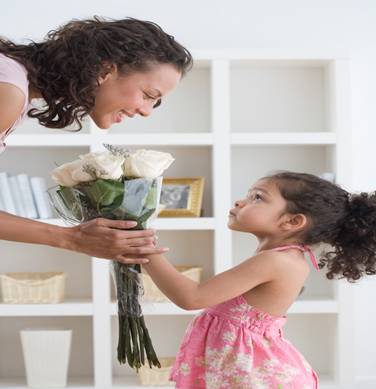
Imagine a husband and wife, married over forty years, sitting hand in hand on
the beach. What might their hand holding represent? Shared hardships?
Parenthood? Joys? Oneness? Likely all of these and more.

Symbolic actions allow a way for us to express our most cherished and personal
inner experiences.
In both of these situations, the child’s gift, the hand holding, the symbolic
action does three things;
firstly it speaks of love, the love that already exists,
secondly it makes present that love and is in itself a meaningful experience, and
thirdly it deepens that love for the future.
Let us pause for a moment to recall and to rest with the mystery of the way in
which, through symbolic action we express the deepest truths and feelings we
possess.
Pause
As is our human way so too is God’s way for it is through symbols and symbolic
actions that God makes himself present in the seven sacraments of the church.
Baptism is the gateway to our sacramental life. It is the beginning of our
journey, a lifetime journey of commitment and discipleship.
Water is the obvious symbol that we associate with Baptism, representing life,
purification and growth. Our initiation into the Christian life begins with
water, so too does the beginning of life portrayed in the very first pages of
scripture: the chaotic waters that are put into order by the Spirit hovering
over them. In Baptism the Holy Spirit comes and stays to hover over our lives
too. In Hebrew the word is “ruah” which means at once, “wind”, “breath” and
“spirit”.
In Baptism the spirit of God breathes into us: breath is life, without breath
there is no life. In the second chapter of Genesis we meet the word “ruah”
again. The breath of God gives life to the human persons God has created. That
breath of God, God himself, lives now within each one of us. The spirit that
hovered over us at our baptism is with us now, for baptism is much more than the
moment of its celebration.
The ritual of Baptism does not bring God’s love into being as if that love did
not exist before the ceremony. Baptism is the Church’s way of celebrating and
enacting the embrace of God who first loved us from the moment of our
conception. Baptism, and all sacraments for that matter, are the ritualisation
of something real, of the outpouring of God’s love and our acceptance of that
transforming love. It remains for us to grow into what we already are: sons and
daughters of God. And to that end the spirit of God is given to us to hover over
us in every moment of our life. For each of us the Spirit of God hovers over the
chaotic waters of life day by day, and if we allow the breath of God to live in
us it will bring order out of the chaos. This is the present reality of the
sacrament of Baptism that we once received.
Pause
The life – death symbolism of water continues through the pages of scripture.
Consider, for example the flood waters of Noah’s day and the saving waters of
the Red Sea parted by Moses. Those waters of the Red Sea, even if they killed
the Egyptians, opened the way for the Israelites to pass from slavery to
freedom, and later crossing one more body of water (the river Jordan) to pass
into the promised land.
In the New Testament, then, it is appropriate that John baptised in the river
Jordan symbolising that “the baptised” were also to leave the slavery of sin for
the freedom of the new promised land. Nor is it without significance that Jesus
chose to be baptised in the Jordan and that the Spirit was present.
Water and Spirit are strong and important symbols of baptism. To be baptised is
to be plunged into the waters and to open oneself to the spirit of Jesus. To be
baptised is to be welcomed into the church and to be nourished there as we
journey with each other and with Jesus in his ministry.
Pause
We find again that baptism is intimately associated with Christ’s passion, death
and resurrection. Jesus said “I have a baptism to receive. What anguish I feel
till it is over.” and asking James and John if they really understood the
implications of their request to sit at his side, he asked if they were ready to
share in his death: “Have you the strength to be baptised with the baptism I am
to be baptised with?” Paul reiterates Jesus’s questions when he asks “Are you
not aware that we who were baptised into Christ Jesus were baptised into his
death? .... we were buried with him so that just as Christ was raised from the
dead .... we too might live a new life”.
Baptism celebrates new life in Christ and to symbolise this new – old theme, the
newly baptised is dressed in a white garment. Among other things the white
garment symbolises the church’s belief that baptism sets us free from original
sin, the reality of evil in the world: for we are indeed born into an ambiguous
world where we are exposed to the influence of sin as quickly as the power of
love. Part of the beauty of Baptism is the assurance that through the outpouring
of God’s love in his sacraments we share in Christ’s life and in so doing share
in his victory over sin.
It is not by accident that the baptismal liturgy of the year is the Easter
Vigil, the grand celebration of Christ’s resurrection. Through Baptism we become
the Easter people.
Pause
The giving of a candle lit from the paschal candle helps spell out this reality.
It is also the way that the church, through baptismal Godparents, who represent
the total community, “passes the torch” of Christian commitment to those being
baptised. To be a disciple of Christ is to be a learner, a journeyer with others
who learn together. Discipleship is built on the concept of “Church” as a
community of followers who support one another in sharing the spirit and mission
of Christ as found in the New Testament. It suggests that life is not a static
condition, but a continual movement towards making real the actions of Jesus in
today’s world. For this purpose the baptismal candidate is anointed with the oil
of catechumens and the chrism of Christ’s salvation. As such we have all been
strengthened for the lifetime journey of commitment to discipleship with Christ.
Through the sacraments God gives himself to us veiled by human signs, symbols
and gestures. He comes to pour out his love to us immediately and personally in
a human way, through our human experience.
Only through prayer can our hearts be opened to the Holy Spirit who alone can
deepen our awareness of the depth and height of God’s love for us. St. Paul
writes “ having the eyes of your heart enlightened, that you may know what is
the hope to which he has called you”.
Pause
Jesus is the ultimate sacrament of God. The greatest expression of God’s love
for us comes to us in the person of Jesus. Jesus is God’s revelation of himself
in person as one of us, a fellow human being. As he walked along the dusty road
from Bethlehem to Calvary he showed us how to live. In a truly human way he
touched the lives of those around him, and his touch contained the very power of
God. With his touch Jesus cured blind eyes, opened deaf ears, raised a little
girl to life, healed a haemorrhaging woman. Through the sacraments he touches
our lives and pours into us his love. In Baptism we exchanged our lives for his.
As St Paul says “I live now not I but Christ lives in me”.
We are the body of Christ and we are called to be the sacrament of God’s love to
each other and to the world beyond the Christian community gathered here. It is
a beautiful thought but it is also a life changing commission. Through baptism
you are called, by your actions, to change the lives of the people God sends
you. You are called to be ministers of God’s love, to be the human expression of
God’s love the human experience of God’s love. To live a sacramental life is to
be yourself the sacrament of God. “I live now not I but Christ lives in me”.
We are the body of Christ. We, the baptised, are that precious diamond that
raised towards the light of the sun will burst into a myriad of colour, each
colour sent by the sun through the diamond to touch a life.
And your life too is touched. To live a sacramental life is to be open to the
Holy Spirit. And this spirit comes to us carrying God’s word, God’s will for us
through each other. We carry God’s truth and God’s love to each other, not only
to those we meet but also to those we may never see.
We have a sacred mission born in us at Baptism. Our mission is to be the visible
sign of God’s love, to be the sacrament of the present moment.